
California Support Debtors Come Under Fire
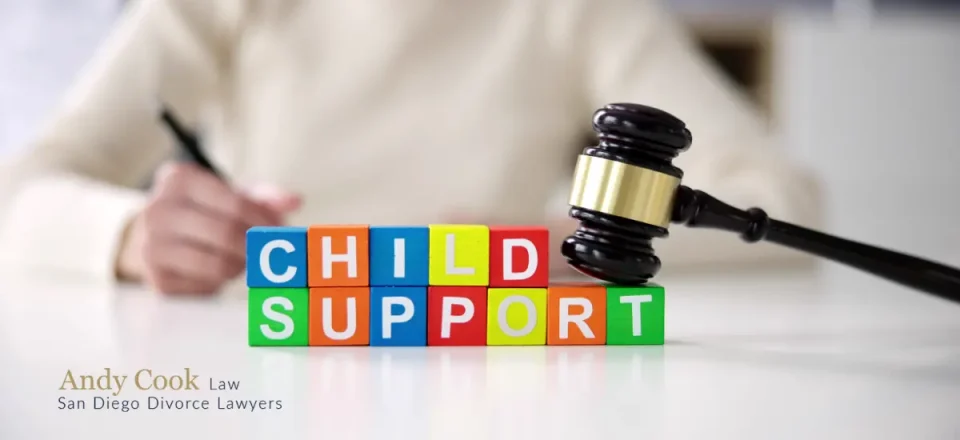
The arms of the law can go a long way towards collecting unpaid spousal and child support. So far, in fact, that a California family court not too long ago granted the request of the former wife (“Monique”) for an order that the ex-husband (“Brett”) assign a copyright he had on certain works of a deceased artist to a receiver so it could be monetized. (Marriage of Strong) (2005) 2025 DJDAR 10823.) The purpose of the request was so that $2 million in unpaid spousal and child support could be paid.
Brett acknowledged that he owed the $2 million. He admitted that the copyright was his sole asset. But he argues that no legal authority permits a court to order the forced assignment of a copyright.
But in a unanimous decision, the California Court of Appeal sided with Monique. It cited Code of Civil Procedure section 695.010, subdivision (a) which provides that, absent an exception, “all property of the judgment debtor is subject to enforcement of a money judgment.”
Brett had argued that the only way the judge could enter the world of intellectual property was to deal with patents. But the judge disagreed and a receiver was appointed with Brett being ordered “to assign the copyright . . . to the [r]eceiver so that the [r]eceiver may monetize the copyright to pay the judgment.”
Since Brett lost, maybe it does not make sense to get into the weeds of his argument. But I shall do so anyway. Brett argued that Code of Civil Procedure section 708.620 defeated the ex-wife’s claim because that section, he said, provides that payments from a copyright or patent may be assigned but does not include a copyright or patent itself. The Court of Appeal said that it was unreasonable “that the Legislature intended to include payments from a copyright as a source but exclude the copyright itself as a source for payment.”
Although this appears as dicta, it is worth noting that the trial judge found that Brett was 70 years old and had not been productive for many years and had no income or savings. As discussed below, courts will do whatever they can to enforce unpaid support obligations.
In reaching their decision, the justices reached back to some ancient cases including the U.S. Supreme Court of Ager v. Murray (1881) 105 U.S. 126 and the California Supreme Court case of Pacific Bank v. Robinson (1881) 57 Cal.520. (This is not a typo; the decisions from the respective Supreme Courts appear to have come out in the same year.)
Interesting, Monique wanted Brett to have to pay her attorney fees as a sanction but the Court of Appeal said no. Indeed, the justices seemed to agree with Brett that there was no precedent directly on point supporting Monique’s position, but the ruling was against him anyway; and now there is a precedent.
Support, particularly child support, is one of the most important debts in American society. It is not surprising that courts will reach to the end of the earth to find a way to liquidate these obligations.
Copyright, the Law Offices of Andy Cook, but my kids are all grown up and I do not owe any spousal support. Just kidding. Not about my family, but I am not sure if I have a copyright. Talk to my SEO provider.
Are You Working with a CFLS?
In San Diego, only a fraction of attorneys are Certified Family Law Specialists. Andy Cook is one of them. This designation by the State Bar of California signifies proven expertise and dedication to family law. Don't settle for less.
Contact Us For A Free Consultation
Our experienced team of attorneys is ready to help. Call 619-515-9900 or contact us using the form below.
Fields Marked With An “*” Are Required

Copyright © 2026 Andy Cook Law. All Rights Reserved.
Digital Marketing By:

*Images are obtained under license from Canva and other third-party stock image providers, with attribution included where required.